Operations software for hospitality.
Logic Software is the software arm of a group that runs hospitality venues. Five products: the service desk, the dining room, the stock room, the rota and the equipment. One of them is finished, and the register below says where the other four actually stand.
| Ref | Product | What it runs | Status | Action |
|---|---|---|---|---|
| LGC-01 | Logic SAT | Technical service desk and digital work orders | Live | Read |
| LGC-02 | Logic Table | Reservations and table management for restaurants | In development | Read |
| LGC-03 | Logic Stock | Purchasing, stock counts and recipe costing | Planned | Not scheduled |
| LGC-04 | Logic Shift | Rotas, clock-in and time and attendance | Planned | Not scheduled |
| LGC-05 | Logic Assets | Equipment registry and preventive maintenance | Planned | Not scheduled |
One of the five is finished.
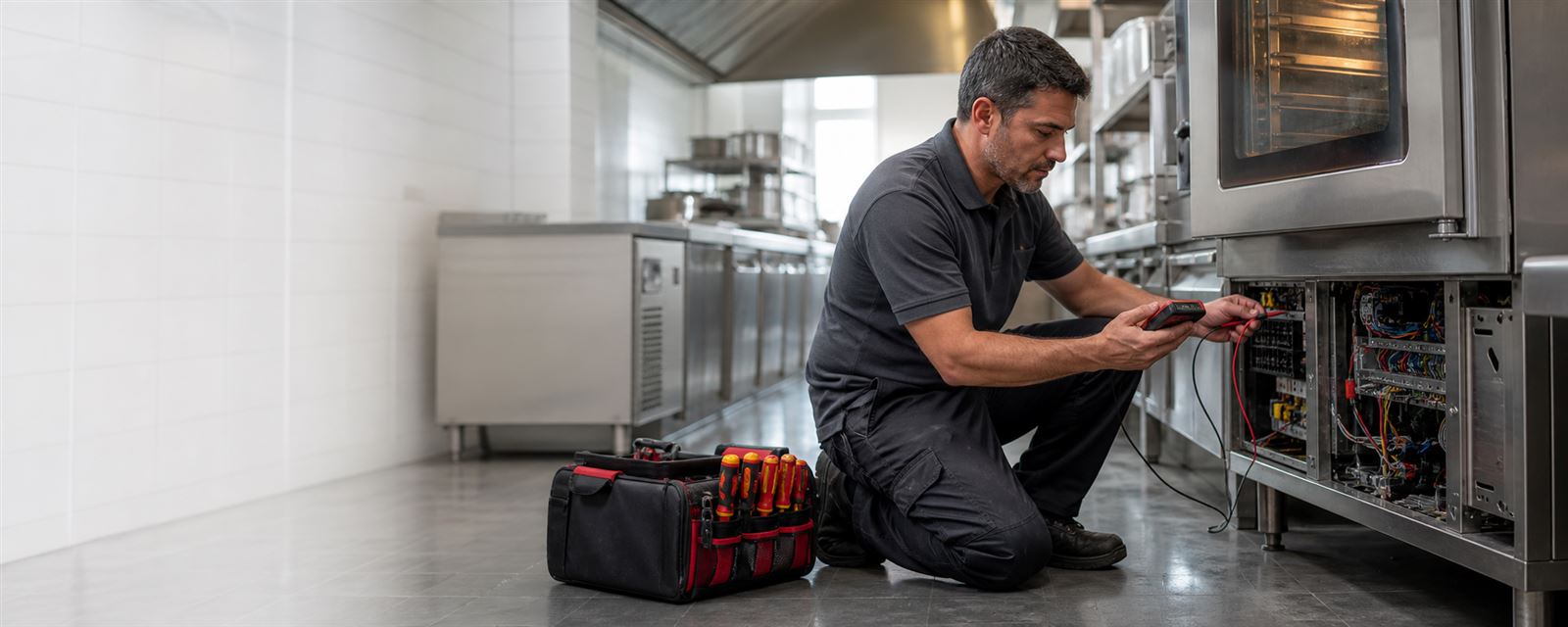
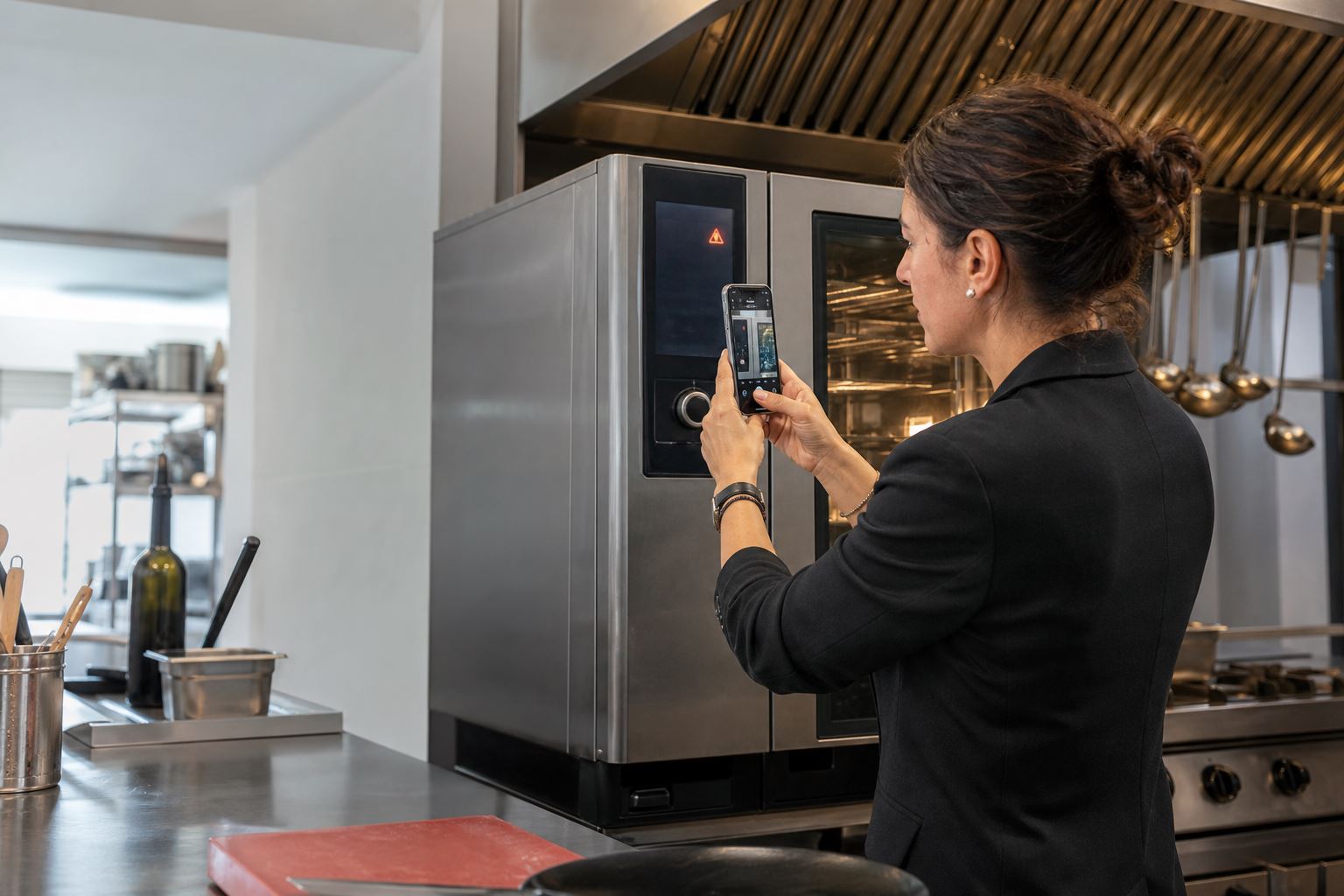
Logic SAT is in production with hospitality technical-service companies. A technician opens a work order on the machine, the timer runs, the photo is mandatory, the customer signs on the screen in the kitchen, and the PDF reaches the office already finished, carrying the SAT's own brand and not ours.
It is the reason this page can be plain about the other four. We know what it costs to take one of these all the way to a signature in a kitchen, so we do not announce the next one until it is close.

Every row of that register inherits the same platform.
What makes a five-product catalogue credible is not its length. It is that the fifth product will not have to re-learn offline sync, signatures, data residency or exports. Those are decided once, at the house level, and every app is held to them.
- Offline first
- Kitchens are in basements and plant rooms are in car parks. Every field app works with no signal at all and syncs when the signal comes back. Offline is the normal case.
- Data in the European Union
- Customer data is stored in the EU under GDPR, with access and erasure rights built into the product rather than handled by email. Technician location is recorded only at the start and end of a job, never continuously.
- Signed documents do not change
- Once a customer signs on the screen, that document is closed. A correction is a new version with its own signature, and the old one stays readable. An audit trail is only worth something if nothing behind it can be edited.
- Your brand on the paperwork
- PDFs, portals and emails go out under the customer's own name and logo. The end client of a Logic customer should never have to learn that we exist.
- Everything exports
- Month-end leaves as CSV for the accounting system already in the building (Holded, Sage, a3), and structured data is available over an API. Nobody should be locked in by a file format.
- One screen per job
- Owner, office, technician, client. Each one sees the screen for their job and nothing else, and every change is attributed to a person and a time.
- Installs from a QR code
- Any Android or iPhone with a browser. Staff scan a code and the app is on the home screen the same afternoon: no store account, no device policy, no fleet of company phones to buy.
- Records keep their history
- Rates, tariffs and settings are versioned. Change a price today and every document signed last year still says what it said last year.
How a product gets onto that register.
Five stages, in order, and a product cannot skip one. It is also why the register has four rows that are not for sale. A name on a plan is not a product until it has survived stage three.
Complaint
A specification starts as a problem someone in one of our venues will not stop having. Nothing starts from a competitor's feature list.
Prototype
Something clickable in weeks, in the hands of the person who complained. Most of what we draw here is thrown away, which is the cheapest place to throw it.
Pilot
One real operator, real jobs, real invoices, no marketing. If it does not survive a full month-end, it goes back to stage two.
Production
EU hosting, backups, monitoring, versioned releases, and the platform standards on the left applied without exception.
Kept
Shipping does not end. Products keep changing, and versioning is what stops those changes from rewriting anything a customer already signed.
A software company that also has to run the restaurant.
Logic Software is the software arm of a group that operates hospitality venues. That is an awkward thing to be. The same people who ask for the feature are the ones who have to live with it on a Saturday night, and it is the entire reason our products look the way they do.
The company is registered in Dubai as Kabala Project Development Consultant FZCO, at IFZA Business Park, Dubai Silicon Oasis. Product data lives in the European Union, and the products are built for the way operations actually run in Spain and the Canary Islands, down to the accounting software already in the office.